
To Pay or Not to Pay – The One-Offs!
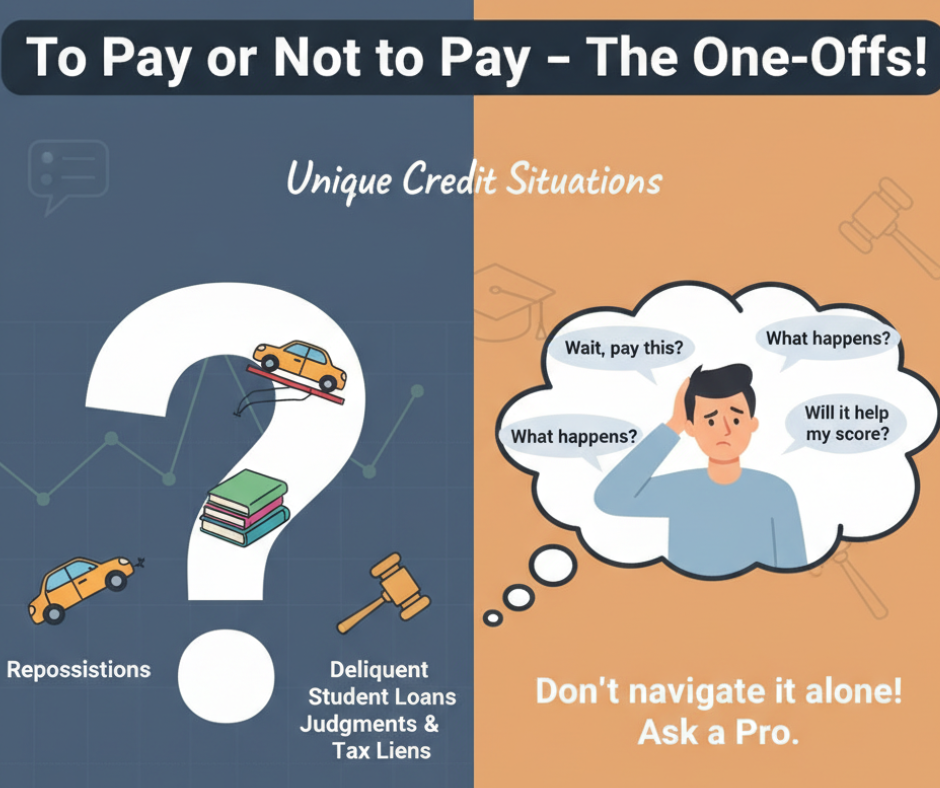
These are the unique credit situations that don’t fit neatly into the usual categories. They’re the ones that make people stop and ask, “Wait, should I actually pay this?” or “What happens if I do?”
Now normally I’d start off with a nice little definition, but let’s be honest — this group is kind of all over the place. So, grab your coffee, take a deep breath, and let’s jump straight into the deep end!
Repossessions
Okay, this one trips people up all the time. A repossession is not the same as a charged-off auto loan — even though they often go hand-in-hand.
Here’s how it works: when your car is repossessed and then sold, you’re still on the hook for the difference between what you owed and what the lender sold it for. That’s called a deficiency balance, and yes, legally, you are still responsible for paying it.
Now for the big question: “Will paying it help my credit score?”
Unfortunately… probably not much. Just like charge-offs, paying a repossession doesn’t magically fix your payment history or boost your score in a big way. So this becomes more of a strategic decision: is it worth it to pay off something that may not actually impact the score? That’s a conversation worth having with a pro.
Delinquent Student Loans
With delinquencies on the rise, we’re seeing a lot more student loans headed to collections. And while these don’t always hurt your score the way you think they might, there’s an important catch: most student loans are federal, and they have to be handled before you can close on a mortgage.
The good news? There’s a path forward. You can contact the loan servicer and ask to enter a rehabilitation program. It usually lasts 6–9 months, and once completed, the loan is removed from collections and updated on your credit report. Yes, there may still be some lates payment showing.
Judgments and Tax Liens
Even though these stopped reporting to credit reports back in 2018, they can still cause major roadblocks in the mortgage process. More often than not, they’ll need to be paid before closing can happen.
Now if there is a collection attached that’s reporting to credit, this is a great time to ask for a deletion letter when you pay it off. It won’t guarantee a score jump, but it definitely can’t hurt!
Other Random Weirdness
Let’s face it: credit reports can be wild. If you run into something and aren’t quite sure whether it makes sense to pay it — the best answer is always to inquire further! And, possibly, speak with a professional credit repair person. And I am happy to provide referrals to ones I trust.
You don’t have to figure it out alone! If this sounds like something you—or someone you care about—is dealing with, reach out. I’ve got resources, answers, and support ready to go.


